Why Piles Get Worse in Monsoon — And What to Do About It in Rohini, Delhi
If your piles symptoms have worsened over the last few weeks — more bleeding, more discomfort, more itching — you are not imagining it. At Goyal Piles Care Centre in Rohini, we see a consistent and significant rise in patient visits every year between July and September. The Delhi monsoon, while bringing relief from the summer heat, creates a set of conditions that make haemorrhoid flare-ups almost predictable.
This article explains exactly why — and what you can do about it right now, whether you have existing piles or are experiencing symptoms for the first time this season.
Why Monsoon Makes Piles Worse — The Clinical Explanation
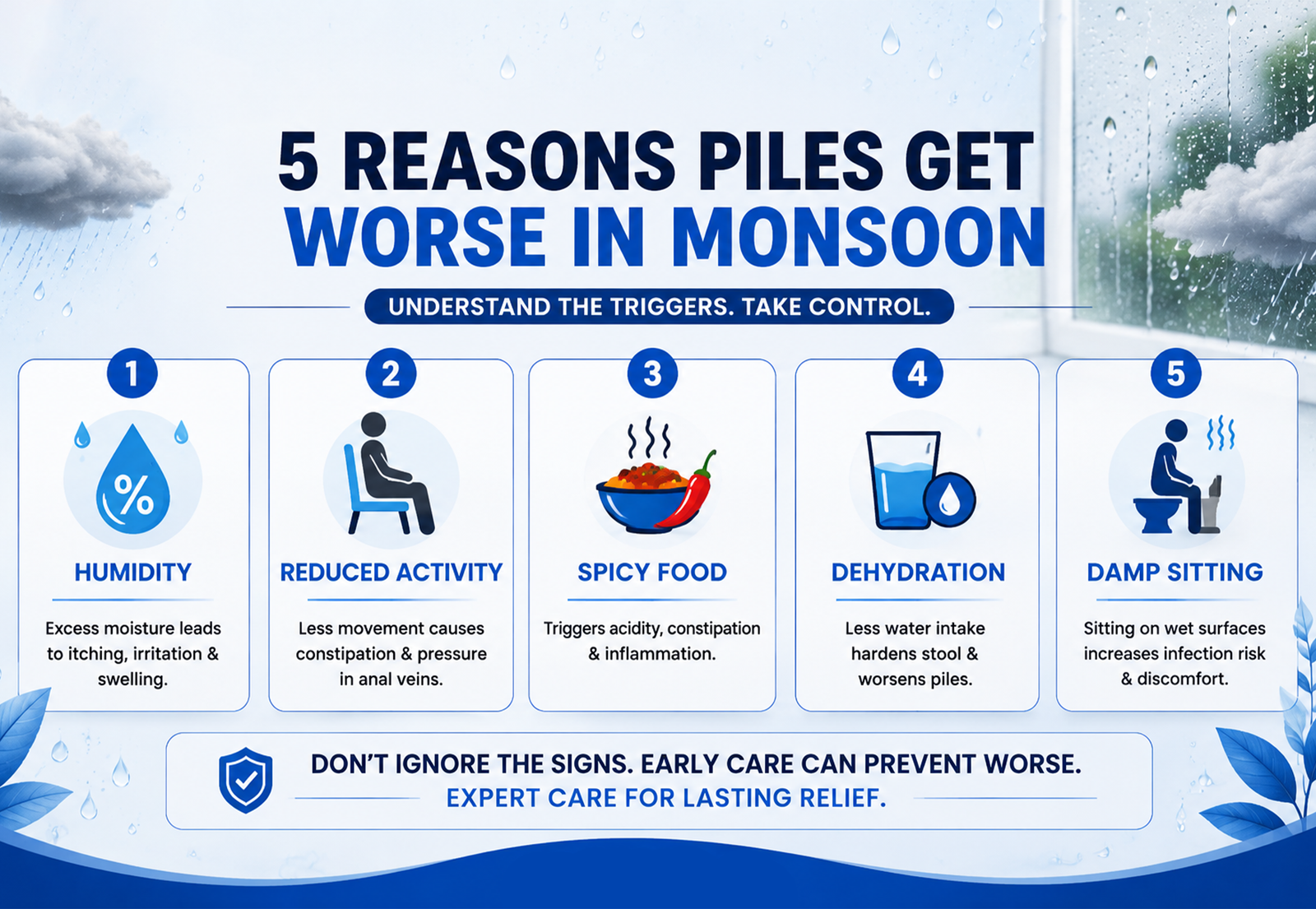
1. Humidity Causes Constant Moisture in the Perianal Area
Delhi's monsoon humidity regularly crosses 75–85% during peak months. High humidity means constant sweating — including in the skin folds around the anal area. This persistent moisture does three things that worsen piles:
- It softens and irritates the already-sensitive perianal skin, worsening itching and burning
- It creates an environment where external haemorrhoids are more prone to inflammation
- It increases the likelihood of secondary fungal or bacterial irritation around the anal area in patients who already have mild external piles
If you are noticing that your symptoms are worse in the morning — after lying in bed in humid conditions overnight — this is why.
2. Reduced Physical Activity Slows Bowel Movement
Monsoon keeps people indoors. Walking is reduced. Exercise stops. The daily routine of outdoor activity disappears for many working adults in Rohini and North Delhi during heavy rain weeks.
Reduced walking and movement slow bowel motility, leading to constipation — one of the primary triggers for piles flare-ups.
3. Monsoon Dietary Changes — Heavier, Spicier Comfort Foods
People tend to eat heavier, spicier comfort foods during monsoons. In Delhi households, the monsoon brings pakoras, samosas, masala chai, heavily spiced gravies, and fried snacks — all of which are low in fibre and high in inflammatory compounds.
- Low dietary fibre → hard stools → straining → piles pressure
- Spicy food → capsaicin irritates the anal mucosa on the way out — worsens pain and burning in existing haemorrhoids
- Reduced water intake → people drink less water when it is cool and humid → stools become dry and compacted despite the season feeling hydrating
4. Damp Sitting Conditions
Sitting on damp, humid surfaces for extended periods — common during monsoon when outdoor furniture, vehicle seats, and clothing retain moisture — increases the time that the perianal area stays moist and warm. This is a low-level but persistent irritant for anyone with external haemorrhoids.
5. Monsoon Stress and Irregular Schedules
Disrupted commutes, waterlogged roads, delayed meals, and disrupted sleep patterns are all associated with monsoon life in Delhi. Stress affects gut motility — it can trigger both constipation and irregular bowel habits, both of which aggravate haemorrhoids.
What to Do Right Now — Monsoon Piles Management in Rohini
If You Have Mild Symptoms That Started or Worsened This Monsoon
Start here — the monsoon-specific adjustments:
- Force your water intake. Aim for 2.5–3 litres of water daily regardless of whether you feel thirsty. Set phone reminders if needed.
- Eat fibre specifically for this season. Add these to every meal: dalia, moong dal, papaya, oats, and seasonal vegetables like lauki and tinda.
- Maintain a daily walk even during monsoon. 20–30 minutes of walking daily is enough to maintain bowel motility. Use a covered walkway, treadmill, or walk indoors.
- Warm sitz baths once daily. 10 minutes in warm water reduces swelling, relieves itching, and keeps the perianal area clean.
- Switch the chai and snack routine. Replace heavy fried snacks and multiple cups of strong tea with fruit or roasted chana.
- Keep the area dry and clean. Use a gentle, fragrance-free wet wipe after each bowel movement rather than dry paper — pat dry thoroughly.
If Your Symptoms Are Significant or Getting Worse
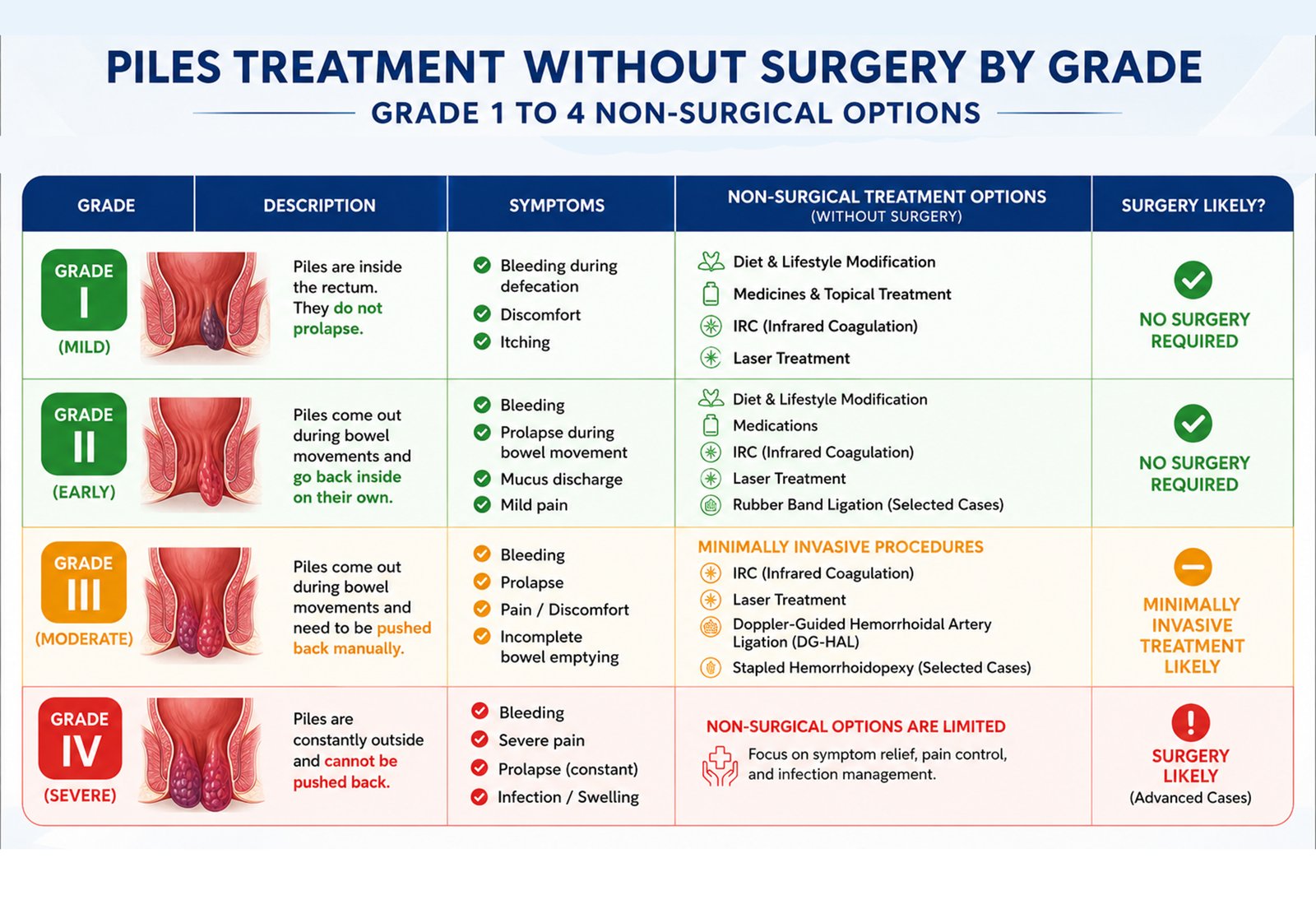
If bleeding has increased, pain is affecting your daily routine, or you have a lump that is more prominent than before — these home measures are not enough. A proper examination confirms your condition and whether intervention is needed. IRC treatment costs ₹30,000–₹35,000 all-inclusive, and laser treatment costs ₹50,000–₹60,000 all-inclusive.

Monsoon Warning Signs — When to Come In Without Delay
See Dr. Sushil Goyal this week if you experience:
- Heavy rectal bleeding — more than minor spotting on tissue paper
- A new lump near the anus that appeared suddenly and is painful (possible thrombosed haemorrhoid)
- Fever with swelling near the anus — possible abscess formation
- Prolapse — a lump coming out that you have to push back, or that will not go back
- Bleeding combined with significant abdominal pain or change in bowel habits
Does Monsoon Affect Fissure and Fistula Too?
Fissure: Yes. Hard stools from dehydration and low-fibre monsoon eating are a primary cause of acute anal fissures.
Fistula: Fistula symptoms can worsen in monsoon due to increased perianal moisture and humidity, which promotes bacterial activity around the external opening.
What About Ayurvedic or Home Remedies for Monsoon Piles?
Home remedies may reduce mild external irritation temporarily but do not address internal haemorrhoids or Grade II prolapse. If home remedies have not helped in the last 2–3 weeks of monsoon, seek a proper assessment.
Frequently Asked Questions
Q: Is it normal for piles to get worse in monsoon? Yes — completely. Humidity, dietary changes, reduced activity, and dehydration all converge to aggravate existing haemorrhoids.
Q: Can the Delhi monsoon cause new piles? Monsoon conditions more commonly aggravate pre-existing haemorrhoids than cause new ones, though new Grade I haemorrhoids can develop with prolonged constipation.
Q: What is the best food to eat during monsoon to prevent piles? Papaya, moong dal, dalia, oats, lauki, and plenty of warm water.
Q: Should I get my piles treated during monsoon or wait until after? Do not wait. IRC and laser procedures are available year-round at Goyal Piles Care Centre.
Goyal Piles Care Centre — Rohini's Piles Specialist Since 1989
At Goyal Piles Care Centre, every monsoon brings a predictable surge in patient visits — and we are fully prepared for it. Dr. Sushil Goyal has been treating piles, fissure, and fistula in Rohini for 37 years through every monsoon season.
476 verified Google reviews at 4.7 stars. Global Excellence Award 2019 — Best Laser Centre in North India.
📍 D-12/182, First Floor, Sector 8, Rohini, Delhi – 110085
Near Rohini East Metro Station Gate 2 | Opposite Metro Pillar No. 393
📞 Call or WhatsApp: +91-9999333166
Monday to Saturday | 9:30 AM to 1:30 PM
Piles treatment options in Rohini → IRC treatment → Diet after piles treatment → Difference between piles, fissure and fistula
This article is for informational purposes only and does not constitute medical advice. Please consult a qualified medical professional for diagnosis and personalised treatment.
