Piles and Diabetes — Safe Treatment for Diabetic Patients in Rohini, Delhi
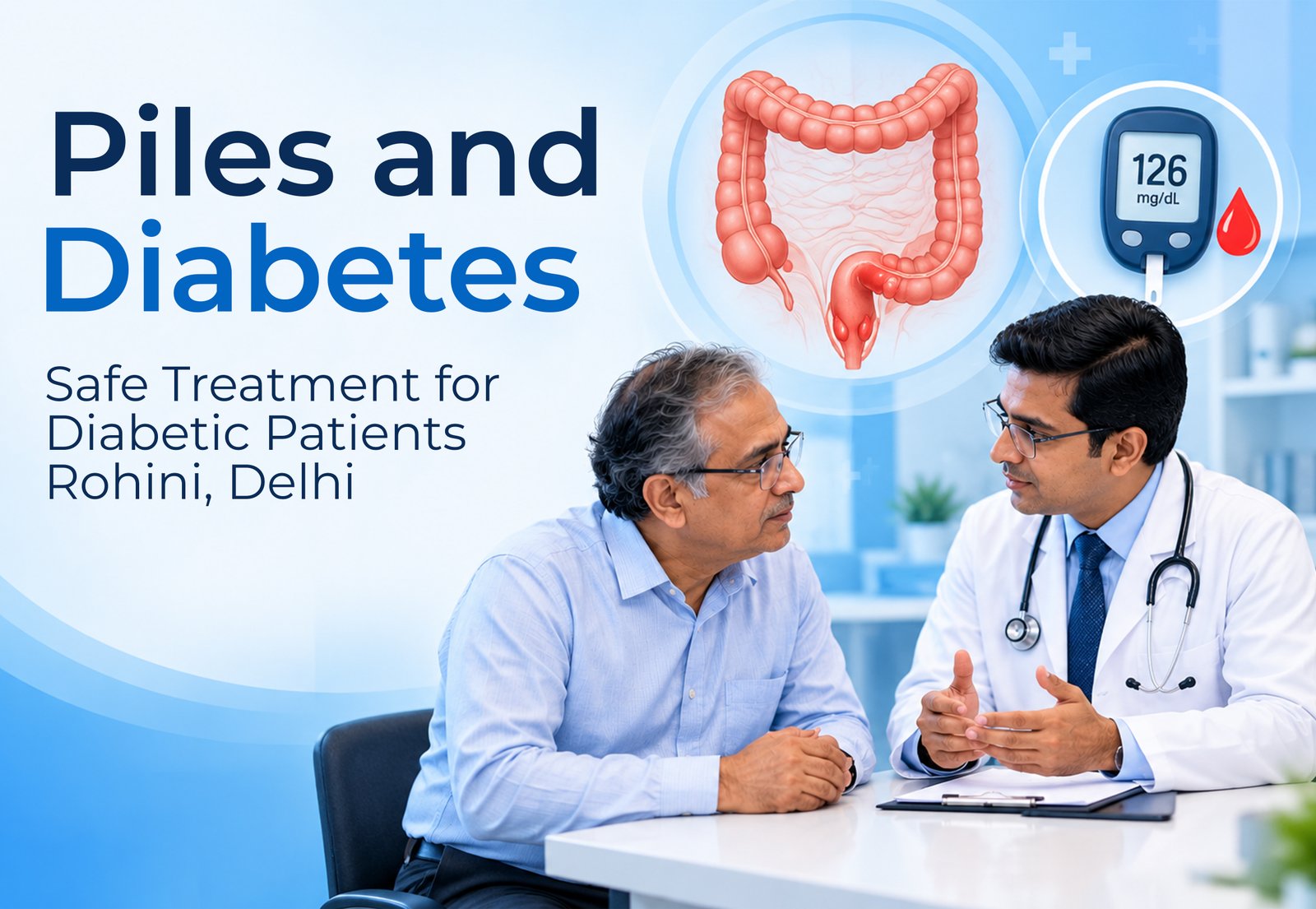
If you have diabetes and are also dealing with piles, you are not alone — and the connection between the two conditions is not coincidental. Diabetes affects blood flow in small blood vessels, making the delicate veins in the anal region more prone to swelling — and slower to heal when they do.
Many diabetic patients delay seeking piles treatment because they are worried about anaesthesia risk, wound healing complications, or interaction with their diabetes medications. These are legitimate concerns — and in some cases, they are the right reason to choose a different treatment pathway than a non-diabetic patient would take.
The good news: most piles in diabetic patients can be effectively and safely treated — often with no anaesthesia at all. Dr. Sushil Goyal has been treating diabetic piles patients at Goyal Piles Care Centre in Rohini for 37 years. This article explains why diabetes and piles are connected, what makes treatment different for diabetic patients, and which options are safest.
Why Diabetic Patients Get Piles More Often — and More Severely
Diabetes creates several conditions that directly increase the risk of haemorrhoid development:
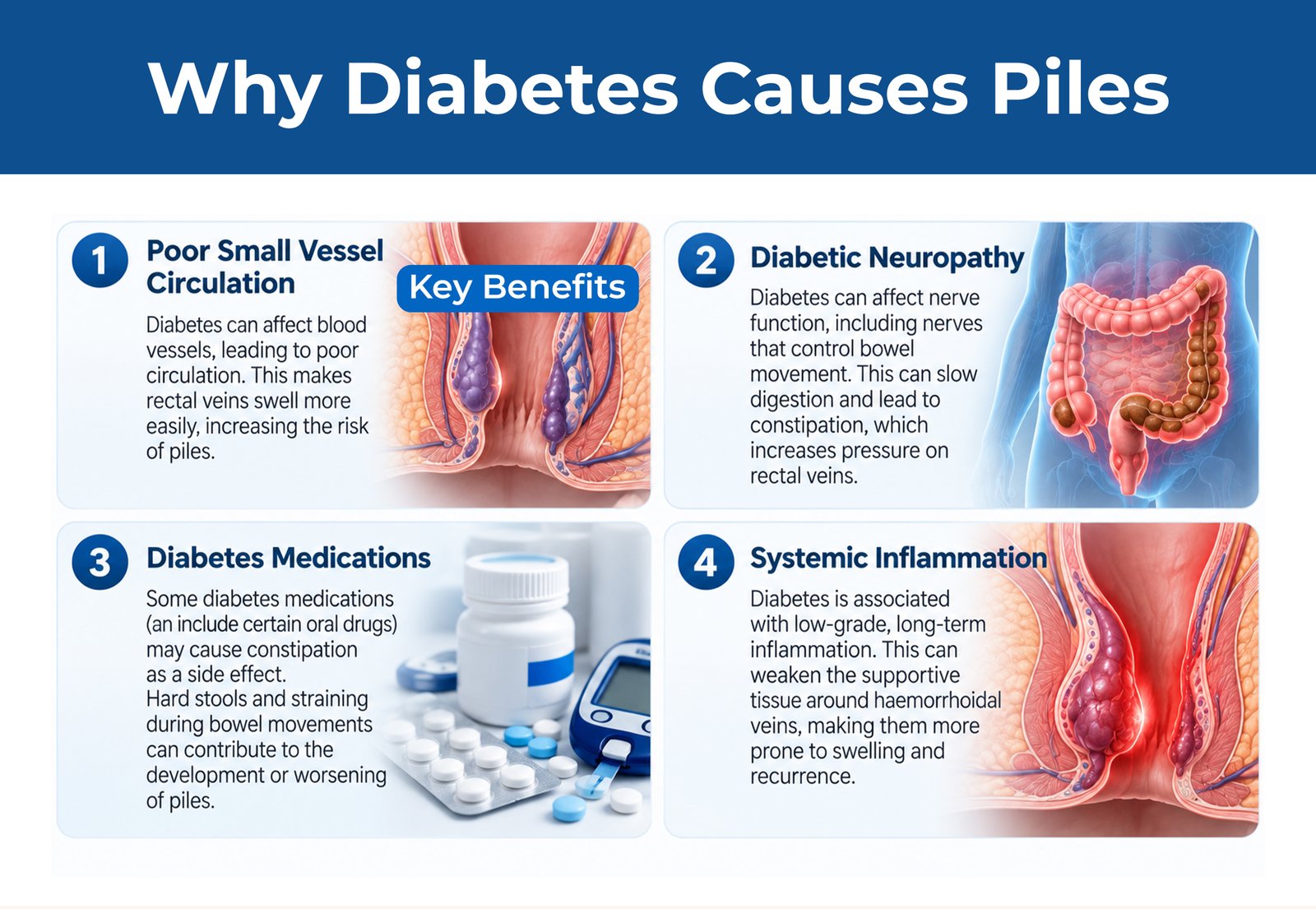
- Poor circulation in small blood vessels. Diabetes affects blood flow in small blood vessels. The anal region has many delicate veins, and when circulation slows down, these veins become more prone to swelling. Haemorrhoids form when venous pressure causes the haemorrhoidal cushions to swell and lose their supporting structure. Reduced microvascular circulation — a hallmark of chronic diabetes — means the rectal vessels are already under strain before any constipation or straining is added.
- Diabetic neuropathy and constipation. People with diabetes often experience slower digestion due to nerve-related issues in the intestines — diabetic neuropathy. This leads to hard stool, straining on the toilet, and irregular bowel movements. Constipation and straining are the primary mechanical triggers for haemorrhoid formation. Diabetic autonomic neuropathy directly causes gastroparesis and slow colonic transit — both of which worsen constipation independently of diet.
- Diabetes medications and constipation. Several medications commonly prescribed for diabetes management have constipation as a side effect. Calcium channel blockers used to manage associated hypertension, iron supplements used to manage anaemia (common in diabetic nephropathy), and certain pain medications used for diabetic neuropathy all slow bowel transit. Certain medications that treat diabetes may also increase the risk of piles due to their side effects like constipation.
- Increased systemic inflammation. Chronic hyperglycaemia creates a state of low-grade systemic inflammation. This inflammation affects connective tissue throughout the body — including the supporting structures of the haemorrhoidal cushions. Weakened connective tissue allows haemorrhoids to prolapse more readily.
- Slower wound healing. Even when piles are treated, diabetic patients heal more slowly from any procedure involving tissue disruption. Elevated blood glucose impairs neutrophil function (the immune cells responsible for wound cleaning), reduces collagen synthesis, and increases infection risk at any wound site.
The Special Concerns of Treating Piles in Diabetic Patients
The concerns that diabetic patients most commonly raise at their first consultation at Goyal Piles Care Centre:
- Anaesthesia risk. Diabetic patients — particularly those with poor glycaemic control, cardiac involvement, or renal impairment — have higher anaesthesia risk than the general population. This is a valid concern and one that directly influences which treatment is recommended.
- Wound healing and infection risk. Any open surgical wound in a diabetic patient carries higher infection risk and slower healing. Post-operative hyperglycaemia (common after surgery-related stress responses) further impairs healing. Procedures that leave no open wound are significantly preferable for diabetic patients.
- Medication interactions. Diabetic patients on metformin may need temporary dose adjustment around certain procedures. Those on insulin require specific pre-procedural glucose management. Patients on anticoagulants for cardiac or peripheral vascular complications need specific management around any procedure.
- OTC cream safety. If you have diabetes, avoid over-the-counter products that contain a vasoconstrictor such as ephedrine, epinephrine, or phenylephrine HCl. Vasoconstrictors in common OTC piles creams can raise blood pressure and affect cardiac function — relevant in diabetic patients who frequently have associated hypertension or cardiovascular disease.
Treatment Options for Diabetic Piles Patients — Safest First
Conservative Management — Grade I, All Diabetic Patients
Conservative management is the appropriate starting point for all Grade I haemorrhoids in diabetic patients — and often produces better results in diabetics than in non-diabetics when implemented consistently, because:
- High-fibre diet directly addresses the diabetic neuropathy-related constipation that drives haemorrhoid formation. The same dietary changes that control blood sugar — reduced processed carbohydrates, increased vegetables, dals, oats — also increase dietary fibre.
- Adequate hydration — 2–2.5 litres daily, adjusted for any renal restrictions. Essential for stool softness in diabetic patients who often have subclinical dehydration from hyperglycaemia.
- Warm sitz baths — completely safe for all diabetic patients. Reduces inflammation and sphincter spasm.
- No OTC vasoconstrictors — confirm with Dr. Sushil Goyal before using any OTC piles cream if you have diabetes and associated hypertension or cardiac disease.
IRC (Infrared Coagulation) — The Ideal Procedure for Diabetic Patients
IRC is specifically well-suited for diabetic piles patients for the same reasons it is suited for elderly patients with comorbidities — and the clinical case is even stronger:
- No anaesthesia required. IRC targets haemorrhoidal tissue above the dentate line where pain receptors are absent. No injection, no sedation, no general or spinal anaesthesia. This eliminates the primary anaesthetic risk concern for diabetic patients entirely.
- No open wound. IRC creates a controlled internal scar at the haemorrhoid base — the overlying tissue is not cut. No wound means no wound healing concern, no infection risk at a surgical site, and no post-operative hyperglycaemia from a surgical stress response.
- No fasting required. Diabetic patients can take their regular morning medications and eat their normal breakfast before an IRC session — avoiding the glucose instability that comes with pre-procedural fasting.
- No blood loss. IRC is essentially bloodless — relevant for diabetic patients on anticoagulants for cardiac or peripheral vascular conditions.
- Same-day return home. No admission, no overnight monitoring, no post-operative period.
What to bring to your IRC appointment if you have diabetes:
- Your current medication list — all medications, doses, and timing
- A blood glucose reading from that morning
- Your most recent HbA1c if available
- Details of any cardiac, renal, or eye complications from diabetes
Dr. Sushil Goyal reviews all of this before any procedure and advises on any precautions specific to your situation.
IRC for Grade I–II haemorrhoids in diabetic patients: course of sessions spaced a few weeks apart, treating haemorrhoidal columns progressively. Each session: 5–10 minutes. No downtime between sessions.
Laser Haemorrhoidoplasty — For Grade II–III Diabetic Patients
For Grade II and III haemorrhoids where IRC alone is not sufficient, Laser Haemorrhoidoplasty (LHP) is the next appropriate option for most diabetic patients.
LHP uses a laser fibre inserted into the haemorrhoidal tissue to shrink it from within — no external wound, no cutting, no stitches. Performed under local or spinal anaesthesia.
For diabetic patients considering LHP:
- Blood glucose should be well-controlled in the weeks before the procedure — discuss with your treating physician
- HbA1c and fasting glucose will be reviewed pre-procedure
- Metformin management around the procedure is discussed with reference to renal function
- Anticoagulant management is coordinated with your cardiologist or physician if applicable
- Local anaesthesia is preferred over spinal where anatomically possible, to minimise glucose disruption
Recovery for diabetic patients: return to normal diet and activity within 1–2 days. No open wound means no wound infection risk. Post-procedure glucose monitoring at normal intervals.
Stapler Surgery — For Grade III–IV With Adequate Glycaemic Control
Stapler surgery (MIPH) for Grade III and IV haemorrhoids is performed under spinal anaesthesia with one overnight admission. For diabetic patients, this requires:
- Well-controlled diabetes (HbA1c ideally below 8% for elective procedures)
- Pre-operative glucose management protocol
- Coordination with the patient's diabetic physician before scheduling
Dr. Sushil Goyal will discuss whether stapler surgery is appropriate for your specific diabetic profile and haemorrhoid grade after examination.
Dietary Management for Diabetic Piles Patients — The Double Benefit
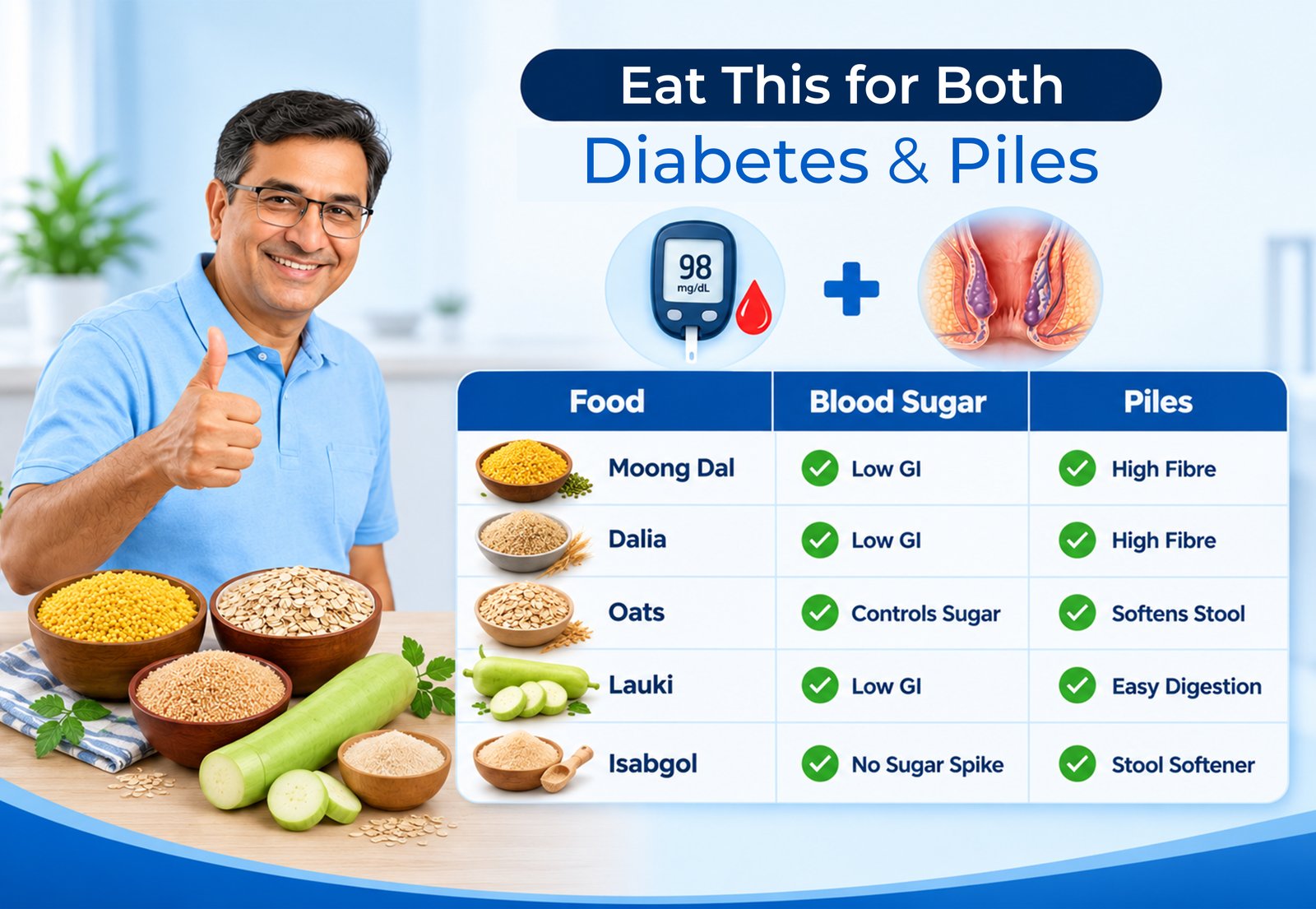
The dietary changes that control blood sugar and the dietary changes that prevent and manage piles are almost identical. This is not a coincidence — both conditions are driven by poor gut transit and constipation in many patients.
High-fibre Indian foods that control both blood sugar and piles:
- Moong dal, masoor dal, chana dal — low glycaemic index, high fibre. Daily.
- Dalia (broken wheat) — low GI breakfast, high fibre. Preferable to white bread or paratha.
- Oats — soluble fibre, proven blood sugar benefit, softens stools. Morning breakfast.
- Lauki (bottle gourd), tinda, spinach — low GI vegetables, good fibre. With meals.
- Papaya — moderate GI, good for digestion and stool regularity. One serving daily.
- Isabgol (psyllium husk) — one teaspoon in warm water at bedtime. Directly softens stool without affecting blood sugar significantly.
Avoid for both conditions:
- White rice in large quantities — refined carbohydrate, low fibre
- Maida-based foods (white bread, biscuits, noodles) — high GI, zero fibre
- Processed foods — both blood sugar and bowel function worsen with these
Our complete diet after piles treatment guide has the full Indian food list.
Managing Constipation From Diabetes Medications
If your constipation has worsened since starting or changing a diabetes medication, discuss this with your prescribing physician before managing it purely with piles treatment. In some cases:
- A different formulation of the same medication causes less constipation
- A stool softener (osmotic laxative) can be prescribed alongside the medication
- A dietary fibre supplement like isabgol can be safely added alongside most diabetes medications
Do not stop or change diabetes medications without medical guidance. At Goyal Piles Care Centre, Dr. Sushil Goyal reviews your current medication list as part of every consultation.
Frequently Asked Questions
Q: Is piles treatment safe if I have diabetes? Yes — the large majority of piles in diabetic patients can be safely treated. IRC, which requires no anaesthesia and leaves no open wound, is specifically well-suited for diabetic patients and can be performed regardless of most comorbidities. Laser and stapler procedures are assessed individually based on glycaemic control and associated conditions.
Q: Can I have IRC treatment for piles if I am on insulin? Yes. IRC requires no fasting and no anaesthesia — you can take your usual insulin dose and eat normally on the day of the procedure. Mention your insulin regimen when booking so the appointment time can be scheduled to minimise disruption to your dose timing.
Q: Is it safe to use OTC piles cream if I have diabetes? Not all OTC piles creams are safe for diabetic patients. Preparations containing vasoconstrictors (ephedrine, phenylephrine) can raise blood pressure and are not recommended for diabetic patients with associated hypertension or cardiac disease. Consult Dr. Sushil Goyal before using any OTC cream if you have diabetes.
Q: My blood sugar is not well-controlled. Can I still get piles treatment? IRC can typically be performed regardless of glycaemic control. Laser and stapler procedures are ideally performed when HbA1c is below 8% — if your control is poor, Dr. Sushil Goyal will discuss conservative management while you work with your physician to improve control before scheduling a larger procedure.
Q: How long does wound healing take for piles treatment in diabetic patients? IRC and laser haemorrhoidoplasty leave no external wound — healing time is not significantly different from non-diabetic patients. The internal tissue response after IRC or LHP occurs over 7–14 days without any external wound care. Stapler surgery, which involves an internal staple line, may take slightly longer to fully heal in poorly-controlled diabetics — this is discussed pre-procedure.
Book Your Assessment at Goyal Piles Care Centre, Rohini
If you have diabetes and piles — and have been avoiding treatment because of concerns about anaesthesia, wound healing, or medication interactions — a consultation at Goyal Piles Care Centre is the right next step.
Dr. Sushil Goyal has been treating diabetic piles patients for 37 years. The consultation reviews your diabetes history, current medications, glycaemic control, and haemorrhoid grade — and recommends the safest, most appropriate treatment for your specific situation.
476 verified Google reviews at 4.7 stars. Global Excellence Award 2019 — Best Laser Centre in North India.
📍 D-12/182, First Floor, Sector 8, Rohini, Delhi – 110085 Near Rohini East Metro Station Gate 2 | Opposite Metro Pillar No. 393
📞 Call or WhatsApp: +91-9999333166 Monday to Saturday | 9:30 AM to 1:30 PM
---
This article is for informational purposes only. Please consult a qualified medical professional for diagnosis and personalised treatment. Never stop or change diabetes medications without medical guidance.
