Piles During Pregnancy in Delhi — What Every Expectant Mother Needs to Know
Around half of all women experience piles during pregnancy — yet most are not prepared for it. When it happens, the questions come fast: Is this normal? Is it dangerous? What can I safely do? Can it harm my baby?
If you are pregnant and dealing with rectal bleeding, pain, itching, or a lump near the anus — this article is written specifically for you. It covers why pregnancy causes piles, what is safe during each trimester, when to see a specialist, and what is available near Rohini, Delhi.
Why Pregnancy Causes Piles — The Clinical Explanation
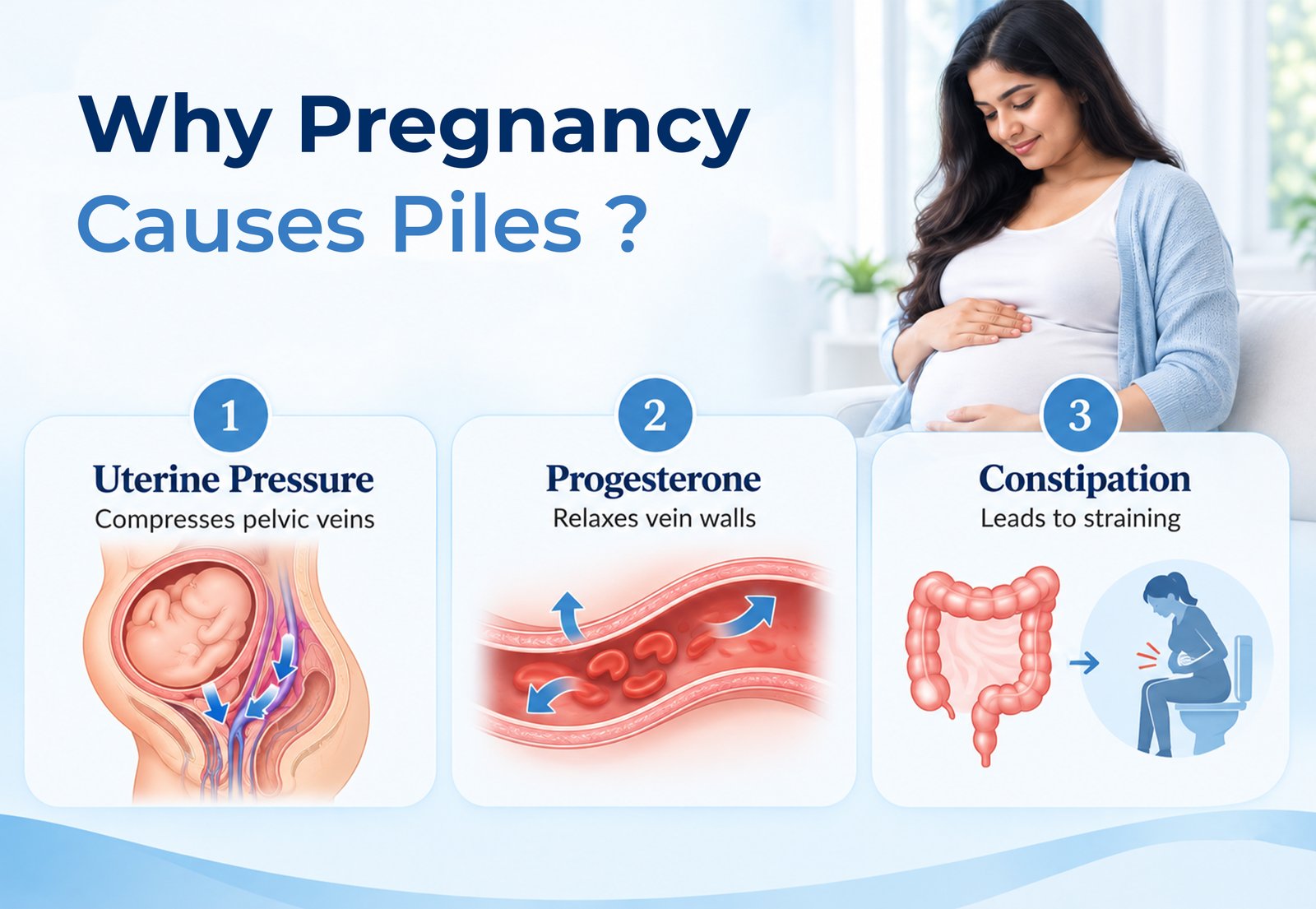
Pregnancy creates near-perfect conditions for haemorrhoids to develop. Three mechanisms act simultaneously:
- Uterine pressure on pelvic veins. As the uterus grows through the second and third trimesters, it sits directly above the major pelvic blood vessels. This pressure restricts venous return from the lower body — blood backs up in the rectal veins, causing them to swell.
- Elevated progesterone. The hormone progesterone relaxes the walls of blood vessels throughout the body — including the rectal vessels. Relaxed vessel walls are more susceptible to swelling under pressure.
- Constipation. The digestive system slows down during pregnancy, causing many pregnant women to become constipated. Straining increases the pressure on haemorrhoidal veins. Iron supplements — prescribed to many pregnant women — further slow bowel transit.
Piles most commonly appear in the last three months of pregnancy — though they can develop earlier in women who had haemorrhoids before becoming pregnant.
Who Is at Higher Risk?
You are at higher risk of developing pregnancy piles if:
- You had haemorrhoids before becoming pregnant
- You are taking iron supplements without compensating with adequate fibre and water
- Your job involves prolonged sitting or standing
- You are in the third trimester — uterine pressure is at its greatest
- You are carrying twins or a larger baby
- This is your second or later pregnancy
Previous haemorrhoid history significantly increases recurrence risk during pregnancy.
Symptoms — and What They Actually Mean
Bright red bleeding after a bowel movement is the most common symptom. The blood is on tissue paper or in the bowl — not mixed with stool. This is the characteristic pattern of haemorrhoidal bleeding.
Itching and moisture around the anus — mucus and discharge from haemorrhoidal tissue irritates the perianal skin. Very common but rarely discussed in pregnancy books.
A soft lump near the anus during or after bowel movement — a prolapsing haemorrhoid. Grade II returns inside on its own. Grade III requires gentle manual reduction.
Pain — internal haemorrhoids are typically painless. Sharp burning pain lasting 20–60 minutes after a bowel movement is more characteristic of an anal fissure — a small tear in the anal lining — which is also common in pregnancy and needs different treatment.
Sensation of fullness or incomplete emptying — large haemorrhoids can create a persistent feeling of needing to go even after the bowel has emptied.
Is Rectal Bleeding During Pregnancy Always Piles?
No — and this is important.
Bright red blood after a bowel movement in a pregnant woman is most commonly from haemorrhoids. But the same symptom can come from an anal fissure, which requires different management.
Seek urgent assessment if:
- Blood is dark red or mixed with stool — not bright red on the surface
- Significant abdominal pain accompanies rectal bleeding
- Bleeding is heavy or continuous
- Fever with anorectal swelling — possible abscess
These patterns are not consistent with haemorrhoids and require prompt medical review. A 10-minute examination at Goyal Piles Care Centre in Rohini confirms the diagnosis immediately.
What Is Safe to Do — Trimester by Trimester
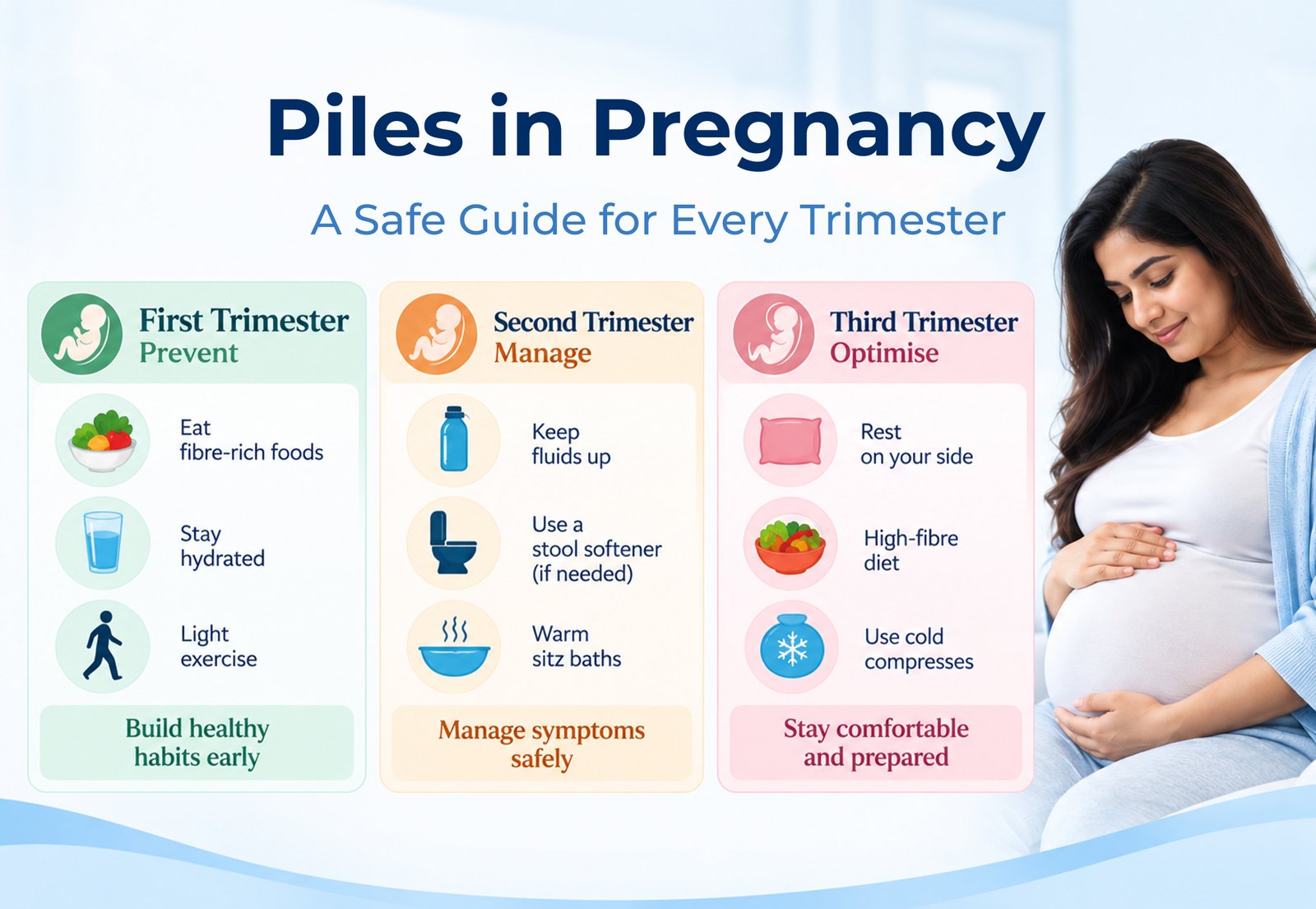
First Trimester — Prevent Before They Start
Most pregnancy haemorrhoids develop in the second and third trimesters. The first trimester is the best time to build the habits that prevent them:
- High-fibre diet — dalia, oats, moong dal, papaya, lauki, fruits, and vegetables daily. Target 25–35 grams of fibre every day.
- 2.5–3 litres of water daily — the most commonly neglected pregnancy nutrition factor. Essential if taking iron supplements.
- Respond to toilet urges promptly — holding on makes stools harder and drier.
- Move regularly — short walks every 45–60 minutes if sitting at a desk.
Second Trimester — Manage if They Appear
If haemorrhoids develop, conservative management is the safe starting point:
- Warm sitz baths — 10 minutes in warm water, 2–3 times daily. Reduces inflammation and discomfort. Safe throughout all three trimesters. No medication involved.
- Cold compress — for acute external swelling, a cold pack wrapped in cloth applied briefly reduces swelling.
- Sleep on your left side — reduces pressure on the inferior vena cava and can reduce haemorrhoidal swelling overnight.
- Topical preparations — only those confirmed safe in pregnancy by your obstetrician. Do not use over-the-counter piles cream without checking. At Goyal Piles Care Centre, Dr. Sushil Goyal only recommends preparations confirmed safe for your specific trimester.
Third Trimester — Optimise Comfort, Plan Ahead
Piles are especially common in the second to third trimesters of pregnancy. The uterus is largest, pelvic pressure is highest, and late-pregnancy constipation from reduced activity compounds the problem.
Continue sitz baths, high-fibre diet, and hydration. If symptoms are worsening significantly — heavy bleeding, significant prolapse, or acute thrombosis — see Dr. Sushil Goyal for assessment. Conservative measures can be optimised and, in rare cases of severe symptom burden, earlier intervention may be considered.
Do not suffer through the third trimester assuming nothing can be done. An examination confirms your grade and clarifies what additional steps can safely improve comfort before labour.
What Treatments Are Safe During Pregnancy?
Always safe:
- High-fibre Indian diet and adequate hydration — no restrictions, no side effects
- Warm sitz baths — safe in all trimesters
- Cold compresses — safe for acute external swelling
- Topical preparations approved by your obstetrician specifically for your trimester
Generally deferred until after delivery:
- IRC (Infrared Coagulation) — while IRC requires no anaesthesia, it is typically deferred until 6–8 weeks post-delivery unless bleeding is causing significant anaemia
- Laser and surgical procedures — planned after delivery and adequate recovery
In our experience at Goyal Piles Care Centre, most pregnant patients with Grade I and II haemorrhoids are managed comfortably through the remainder of their pregnancy with optimised conservative care. IRC or laser is then planned after delivery where needed.
Will Pregnancy Piles Go Away After Delivery?
Some do. Many do not — not without treatment.
Grade I haemorrhoids — many improve after delivery with consistent dietary management. Conservative care postpartum is the first step.
Grade II haemorrhoids — may improve with conservative care but often require IRC for definitive resolution. Without treatment, they frequently persist and sometimes worsen.
Haemorrhoids worsened by labour — the pushing effort during childbirth significantly worsens existing haemorrhoids. This is expected but not inevitable to leave untreated.
If your haemorrhoids have not significantly improved by 6–8 weeks after delivery, they are unlikely to resolve on their own. See our dedicated piles after delivery guide for the full postpartum picture.
Can Pregnancy Piles Harm the Baby?
No. Haemorrhoids are swollen blood vessels in the mother's anorectal area. They have no connection to the uterus, placenta, or baby's blood supply. They cannot cause miscarriage, affect foetal development, or complicate the pregnancy directly.
The indirect concern: if haemorrhoidal bleeding is persistent and heavy, the mother may develop iron deficiency. Significant or persistent bleeding should always be assessed and managed.
Fissure vs Piles in Pregnancy — An Important Distinction
Sharp burning pain lasting 30 minutes to 3 hours after a bowel movement is more characteristic of an anal fissure than of haemorrhoids. Many pregnant women have both simultaneously.
If your main symptom is pain rather than bleeding, an examination at Goyal Piles Care Centre confirms whether a fissure is the primary issue — and what is safe to do during pregnancy. The management of a fissure differs from haemorrhoid management, so an accurate diagnosis matters.
Frequently Asked Questions
Q: Are piles during pregnancy dangerous? Piles during pregnancy are not dangerous to the baby and are not a pregnancy complication. They are a common discomfort affecting up to half of all pregnant women. Persistent or heavy bleeding should always be assessed to rule out other causes and monitor for iron deficiency.
Q: Can I use an over-the-counter piles cream during pregnancy? Not without checking first. Several common OTC creams contain vasoconstrictors or local anaesthetics with limited pregnancy safety data. Mention the product name when you call +91-9999333166 and we can advise before your visit.
Q: Will my piles affect labour and delivery? Existing haemorrhoids do not prevent vaginal delivery. However, the pushing effort during labour frequently worsens them. This is normal. After delivery, see our piles after delivery guide for what to expect next.
Q: When should I see a specialist for piles during pregnancy in Rohini? See Dr. Sushil Goyal if: bleeding is more than minor spotting; a prolapsing lump is causing significant discomfort; symptoms are worsening despite conservative care; or you have any dark or mixed rectal bleeding. Do not wait for your postnatal appointment if symptoms are severe during pregnancy.
Q: What is the safest piles treatment during pregnancy in Delhi? The safest first-line treatment is dietary management — high-fibre Indian diet, adequate hydration — plus warm sitz baths twice daily and any topical preparation approved by your obstetrician. This is safe throughout all three trimesters and effectively manages most Grade I and II pregnancy haemorrhoids. Procedural treatment is generally planned for after delivery.
Book an Assessment at Goyal Piles Care Centre, Rohini
Dr. Sushil Goyal has been treating piles in pregnant patients at Goyal Piles Care Centre since 1989 — 37 years of managing pregnancy haemorrhoids with conservative, evidence-based care tailored to each trimester.
If you are pregnant and experiencing symptoms, an examination takes under 10 minutes and tells you whether you have haemorrhoids, a fissure, or something needing further attention — and what is safe to do right now.
476 verified Google reviews at 4.7 stars. Global Excellence Award 2019 — Best Laser Centre in North India.
📍 D-12/182, First Floor, Sector 8, Rohini, Delhi – 110085 Near Rohini East Metro Station Gate 2 | Opposite Metro Pillar No. 393
📞 Call or WhatsApp: +91-9999333166
Monday to Saturday | 9:30 AM to 1:30 PM
→ Piles after delivery — the postpartum guide → Piles treatment for women in Rohini → Difference between piles, fissure and fistula → Diet after piles treatment
This article is for informational purposes only. Consult your obstetrician and a qualified proctologist for diagnosis and personalised treatment during pregnancy.
